
Staff Augmentation vs. Full Outsourcing: What's Right for Your Team?
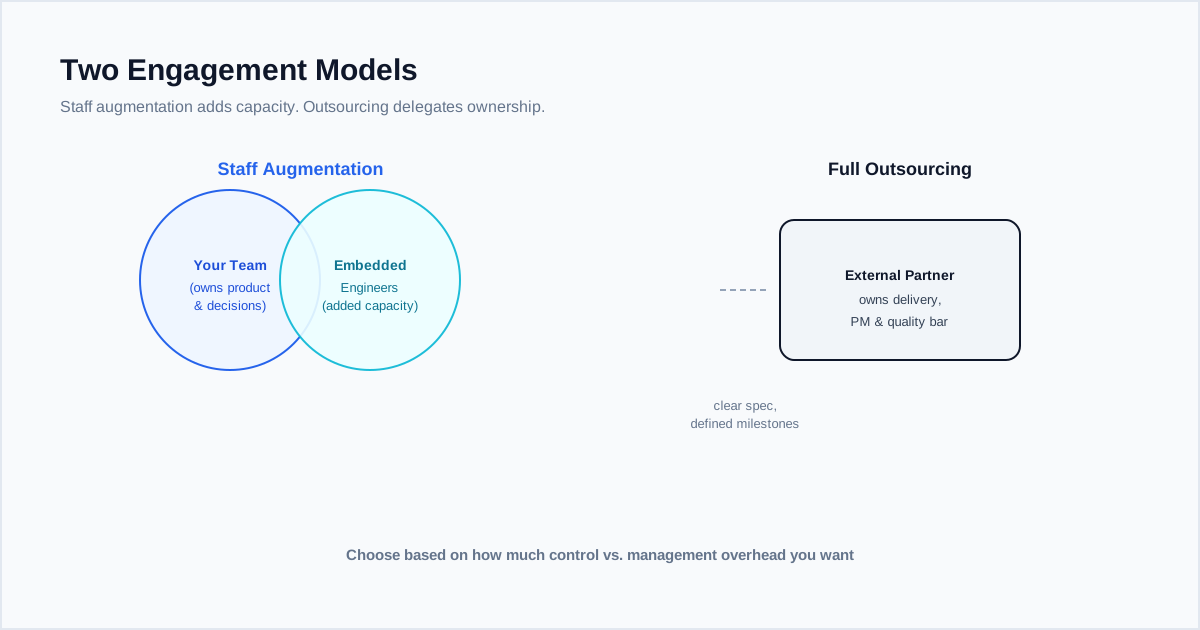
Staff augmentation and full outsourcing solve different problems. Augmentation adds capacity to a team that already has product and technical ownership; outsourcing delegates that ownership to an external partner.
If you have strong in-house leadership but need more hands to hit a deadline, dedicated engineers embedded in your existing process are usually the faster, lower-risk option.
How Engagements Tend to Evolve
If you're a non-technical founder or need an entire capability you don't have in-house — like a QA practice or DevOps function — a fully-owned project engagement can be more effective. In this model, the partner takes on delivery accountability end-to-end, including its own project management and quality bar, rather than slotting engineers into your existing sprints.
The tradeoff is control versus overhead. Augmentation keeps decision-making entirely with your team but requires you to manage onboarding, code review, and sprint planning for the augmented engineers. Outsourcing removes that management overhead but requires clear specifications and milestones upfront, since the partner is optimizing against a scope rather than daily direction.
What We Tell New Clients
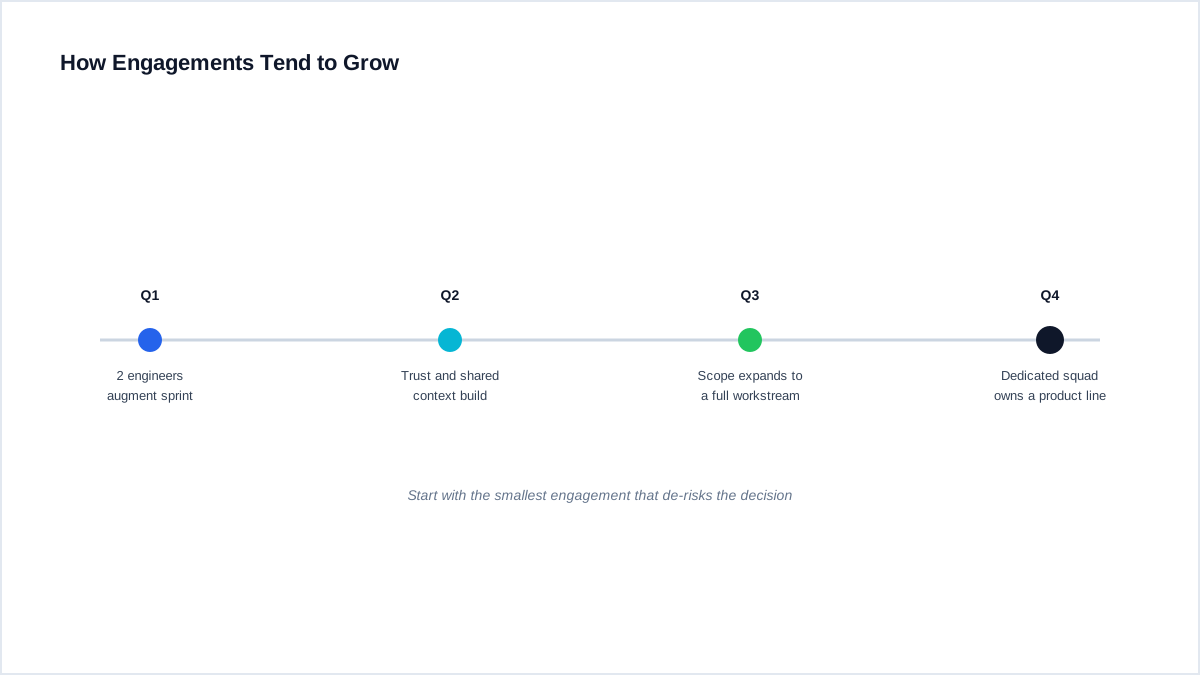
Many of our longest relationships start as staff augmentation and evolve into broader engagements as trust and shared context build over time — a couple of embedded engineers on a critical sprint often becomes a dedicated squad owning an entire product line within a year, once the working relationship has proven itself.
Our advice to new clients: start with the smallest engagement that de-risks the decision. If you're unsure whether a partner will mesh with your team's culture and quality bar, a two-engineer augmentation for one quarter tells you far more than a lengthy vendor selection process ever will.