
Security Testing Fundamentals Every Product Team Should Know
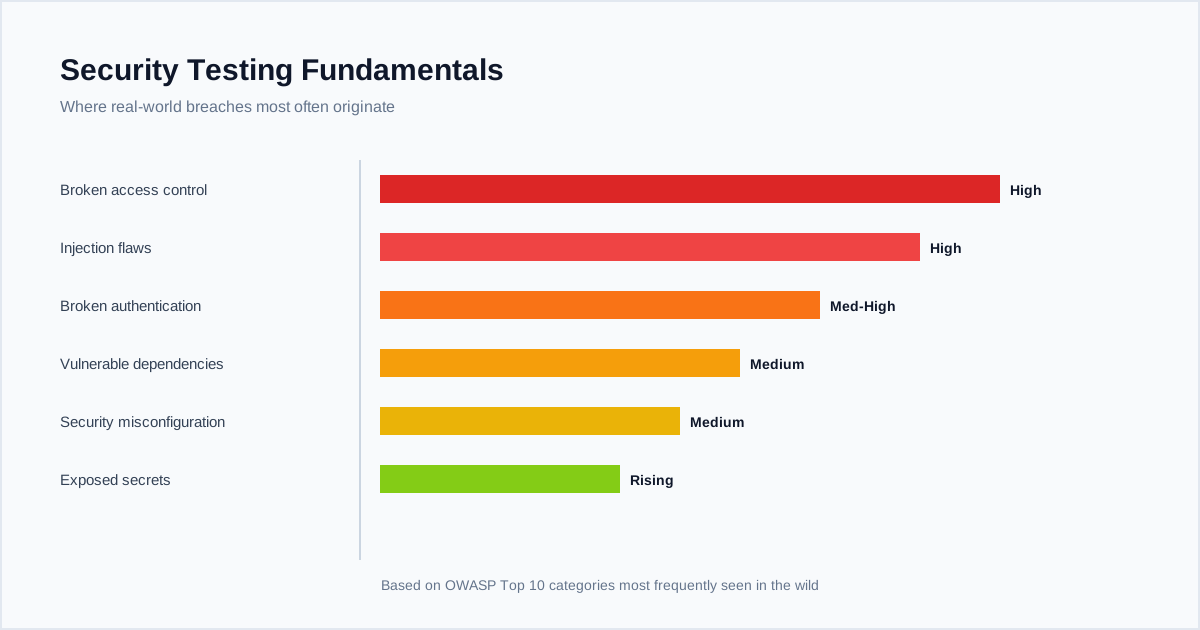
Security testing is often treated as a pre-launch checkbox, but the teams with the fewest incidents build it into every sprint.
Start with the OWASP Top 10 as a baseline — injection flaws, broken authentication, and misconfigured access controls account for the majority of real-world breaches.
Where Security Testing Fits in the Pipeline
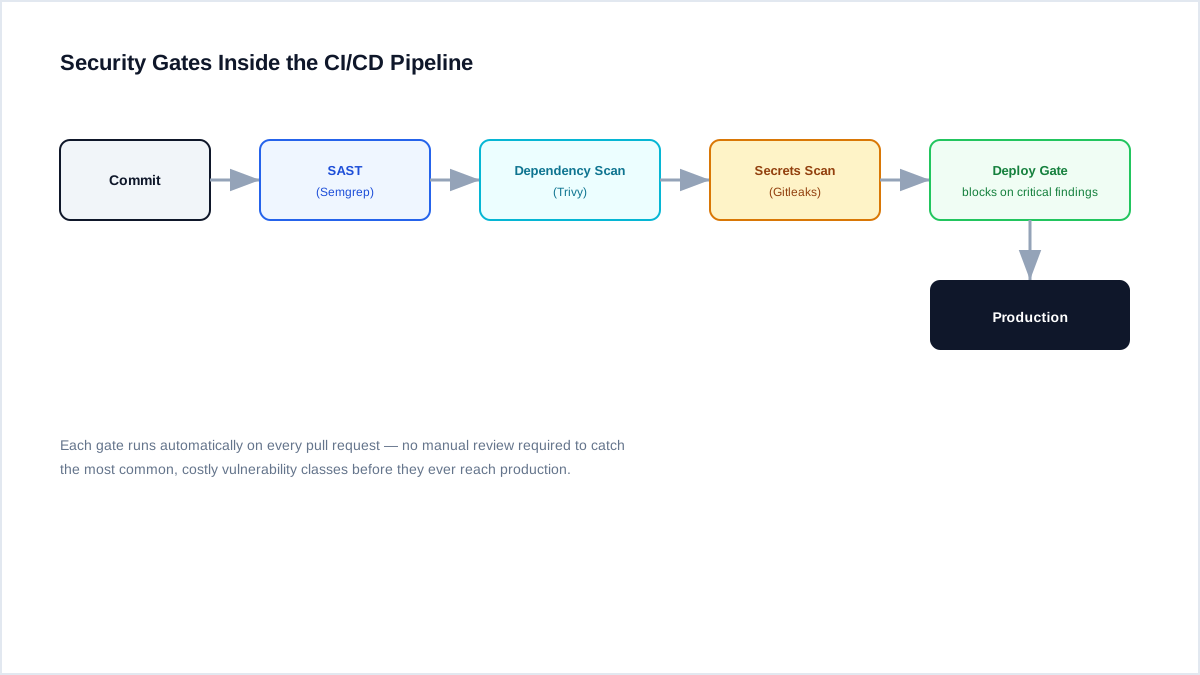
Automated dependency scanning catches known vulnerabilities in third-party packages before they ship, while periodic manual penetration testing catches the logic flaws automated tools miss. Static application security testing (SAST) tools like Semgrep can run on every pull request in seconds, flagging injection risks and insecure patterns before a human reviewer even looks at the diff.
Secrets scanning deserves its own line item. Credentials committed to a repository — even briefly, even in a private repo — should be treated as compromised the moment they're pushed, since git history is forever unless actively rewritten. Tools like Gitleaks catch this at commit time, before the secret ever reaches a shared branch.
From Finding to Fixed
The step teams struggle with most isn't finding vulnerabilities — modern scanners are good at that — it's triaging and fixing them fast enough that the backlog doesn't grow faster than the team can clear it. A scanner that produces 400 findings with no risk ranking just trains engineers to ignore the report.
Pair automated scanning with a clear incident response plan, and most teams significantly reduce both the likelihood and impact of a security event. We cover exactly this challenge — turning raw scanner output into prioritized, fixable work — in our next post on the AI Security Engineer.