
Why We Choose Next.js for Enterprise Platforms
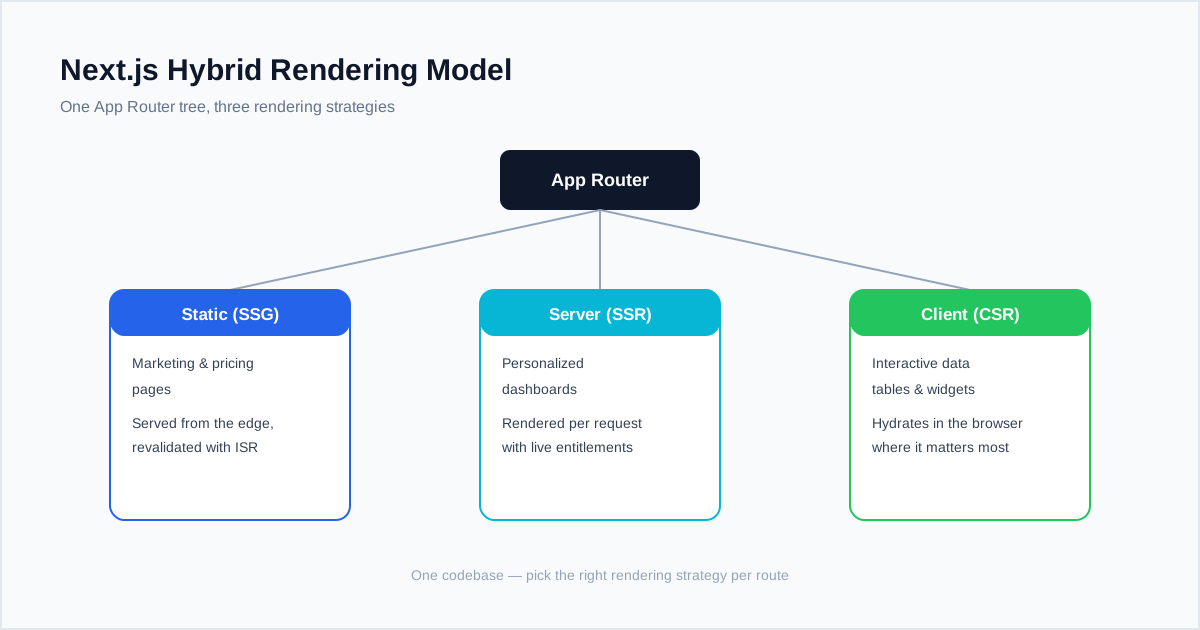
When we evaluate a framework for a new enterprise engagement, we weigh three things: developer velocity, runtime performance, and long-term maintainability. Next.js consistently scores well across all three.
Its hybrid rendering model lets teams choose static generation for marketing pages, server rendering for personalized dashboards, and client-side interactivity where it matters — all within a single codebase.
One Framework, Three Rendering Strategies
For enterprise clients specifically, the App Router's layout system reduces duplicated boilerplate across large route trees, while built-in image and font optimization take performance work off engineers' plates entirely.
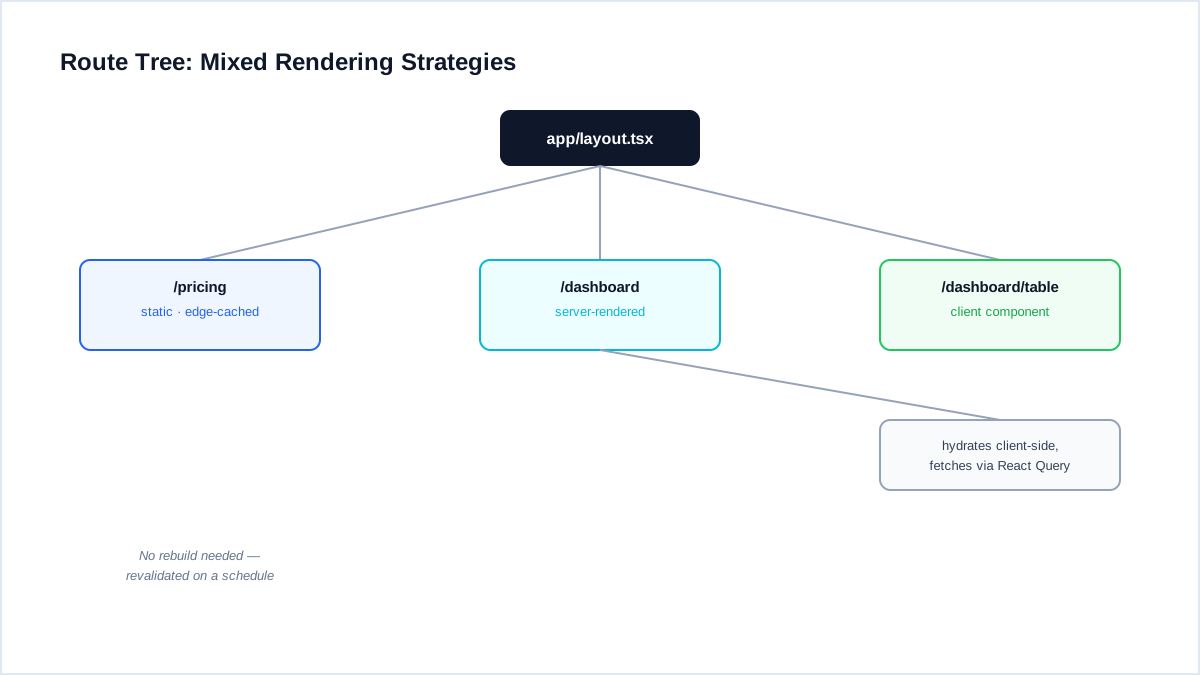
In practice, this means a pricing page can be fully static and served from the edge in milliseconds, a customer dashboard can be server-rendered per request to reflect live entitlements, and a data-heavy table on that same dashboard can hydrate client-side with React Query — all without spinning up separate services or repos.
Incremental Static Regeneration (ISR) is the feature enterprise teams underuse the most. Content-heavy sections — help centers, product catalogs, blog sections like this one — can be statically generated at build time and revalidated on a schedule, giving CDN-level speed without a full rebuild every time content changes.
Where We Stay Careful
Next.js isn't a silver bullet. Teams migrating a large legacy SPA need a clear route-by-route migration plan rather than a big-bang rewrite, and heavy client-side state management (large real-time dashboards, canvas-based editors) still benefits from careful component boundaries so server and client code don't get tangled.
Combined with strong TypeScript support and a mature ecosystem, Next.js has become our default starting point for new web platforms unless there's a specific reason to reach for something else — and even then, we document exactly why, so the decision holds up under review a year later.